2026 How to Choose the Best Dispensing Machine

Choosing the best dispensing machine in 2026 starts with the material, not the product brochure. A thick adhesive, a thin coating, and a temperature-sensitive fluid behave differently under pressure. The right system must handle your actual material consistently, without excessive waste or constant adjustment. Small details matter. A nozzle that clogs during a short production run can disrupt an entire shift.

Start by defining the job: required volume, placement accuracy, cycle time, and expected daily output. Then consider how operators will load, clean, and maintain the equipment. A machine may look precise in a demonstration yet perform differently with your containers, workpieces, and production rhythm. Test representative materials when possible. Observe the first few cycles, then check repeatability over a longer run. That extra test is easy to skip.

Compare controls, compatible dispensing methods, changeover time, safety features, and access to technical support. Ask suppliers how accuracy is measured and what routine maintenance requires. Review specifications carefully; a stated maximum output may not match your real operating conditions. It is tempting to choose the fastest or most automated model. That assumption can be wrong. A simpler machine may suit a small team better, while a busy line may need programmable control and stronger process monitoring. Neither option is automatically best.

This guide explains how to evaluate these factors and build a practical shortlist. Use it as a starting point, not a substitute for testing. Your process may be less predictable than expected. That is worth admitting early.
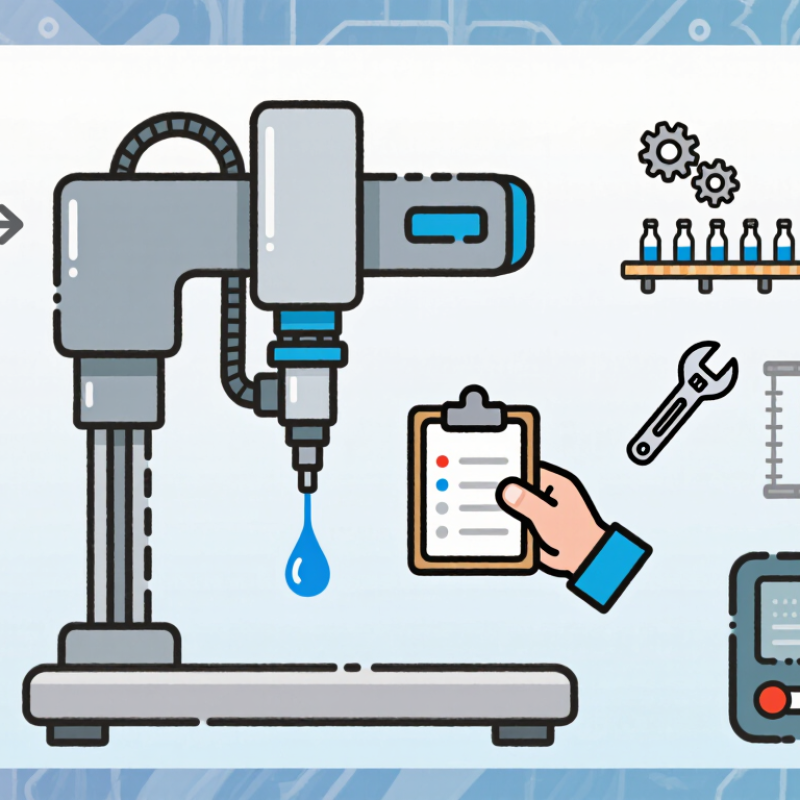
2026 How to Choose the Best Dispensing Machine

What a Dispensing Machine Does and Where It Is Used

A dispensing machine stores and releases a controlled amount of a product when a user or system requests it. Depending on its design, it may count small parts, measure liquid, or provide a fixed portion of food or supplies. A screen, button, sensor, or connected control system can start the process. Inside, trays, pumps, valves, and sensors help guide the product to an outlet. The exact setup matters.

These machines appear in many everyday settings. A factory may use one to deliver screws or components to an assembly station. A café might use a unit to portion ingredients, while an office can use one for basic supplies. In each case, the goal is steady access with less manual handling. But a machine is not automatically more accurate: worn parts, poor calibration, or a poorly matched product can cause jams or uneven portions. Small details matter.

Tips: Check what the machine dispenses, how often it needs refilling, and how easily staff can clean it. Test it with the actual product, not just an empty demonstration. Note any awkward steps; they may become daily frustrations.

Which Materials and Dispensing Tasks Must It Handle?

Choose a dispensing machine by mapping the material to the task, not by starting with a speed claim. Thin oils flow differently from high-viscosity silicone, filled epoxy, or abrasive ceramic paste. Check viscosity across the actual operating temperature, filler size, settling tendency, and whether the fluid reacts with seals or tubing. A quick compatibility test with a small sample can prevent swelling, clogging, or cure inside the line. Messy, but useful.

Then define the deposit: a continuous bead, repeatable dots, a narrow line, or a measured cavity fill. Bead work may need controlled pressure and steady motion; tiny dots often need a fast valve and stable, short material paths. For two-part fluids, include ratio control and mixing time. For heat-sensitive materials, confirm that the reservoir and nozzle will not raise the temperature too far. The International Federation of Robotics’ World Robotics 2024 report counted 4,281,585 industrial robots operating worldwide in 2023, a reminder to check how the dispenser will connect to automation. Yet a robot-ready machine is not automatically a good fit. A datasheet may hide the effect of air bubbles, operator changes, or a nozzle that slowly wears. Test with the real material, target pattern, and production rhythm before choosing.

How to Compare Accuracy, Speed, and Control Features

2026 How to Choose the Best Dispensing Machine

How to Compare Accuracy, Speed, and Control Features

A dispensing machine’s stated accuracy matters only when it holds up with your actual material. Test repeated shots at the start and end of a run, using the intended temperature, viscosity, and nozzle. Weigh each deposit; record variation, not just the average. Small differences matter. McKinsey Global Institute’s 2017 report, A Future That Works, estimates automation could add 0.8–1.4 percentage points to annual global productivity growth. This is broad context, not a dispenser performance benchmark.

Compare speed using a complete cycle, including loading, positioning, dispensing, and recovery. A fast stroke may not mean more finished parts per hour. Run a timed trial with realistic pauses and changeovers. Test the real cycle. Check whether accuracy drifts as speed increases, especially on small deposits or narrow paths. Ask for repeatability data and confirm the test method; a single successful sample proves little.

Control features should make results easier to reproduce. Look for adjustable pressure, time, and dispense volume, plus saved recipes, alarms, and clear calibration records. Log changes so operators can trace why a deposit varied. If several users share the machine, test whether permissions prevent accidental recipe edits. More controls are not always better. Choose a system operators can set correctly, then verify it during a hands-on trial.

How to Match Machine Type to Production Needs

A dispensing machine should fit the material, dose size, and pace of the production line. Start by checking the fluid’s viscosity and whether it contains particles. A thin liquid may flow well through a timed-pressure system, while thicker pastes often need positive-displacement dispensing. Tiny doses usually require tighter control than broad adhesive beads. Small batches change things.

Next, consider how often the product and container change. A benchtop machine can suit prototypes or varied, low-volume work. For steady output, an automated system may reduce repetitive handling and keep cycle times consistent. Look beyond the machine’s advertised speed. Loading, cleaning, refilling, and changeovers all take time. A fast cycle is not useful if operators spend each shift correcting drips.

Before selecting equipment, run trials with the actual material, container, and target dose. Record dose variation, setup time, and waste across several cycles. Measure twice. Production plans can be too tidy; real lines pause, materials vary, and nozzles wear. Allow room for those conditions, but avoid buying capacity that your team cannot use. A short trial may reveal that a simpler machine meets the need, or that a modest adjustment is required.

2026 How to Choose the Best Dispensing Machine - How to Match Machine Type to Production Needs
Machine type Best suited production needs Typical dispensing approach Common material fit Key advantages Main considerations Good choice when…
Manual hand-held dispenser Prototypes, repairs, lab work, and low-volume or frequently changing jobs Operator-controlled syringe, cartridge, or hand tool Many assembly adhesives, sealants, greases, and pastes, subject to tool compatibility Low initial cost; quick setup; easy to move between tasks Output and placement consistency depend heavily on operator technique; limited automation Flexibility matters more than repeatability or high output
Pneumatic time-pressure dispenser Small-batch assembly and benchtop work requiring more consistent deposits than manual dispensing Controlled air pressure and dispense time push material from a syringe or cartridge Low- to medium-viscosity fluids and pastes; suitability depends on material and package Simple to operate; adjustable dispense settings; relatively straightforward to add to a workbench Changes in material viscosity, temperature, fill level, or air pressure can affect deposit size Parts are positioned by an operator, but more controlled dispensing is needed
Benchtop XYZ dispensing system Repeatable small- to medium-batch production with consistent paths, dots, or patterns Programmable motion platform moves a dispense valve or syringe over a positioned part A range of fluids, adhesives, sealants, and pastes when paired with a compatible valve and feed system Repeatable paths; stored programs; less variation from operator movement Requires program setup, fixturing, and suitable part presentation; cycle time depends on path and process settings The same dispense pattern must be reproduced across many parts or product variants
Inline automated dispensing system Medium- to high-volume production integrated with a conveyor or automated assembly line Automated part handling and dispensing, often with sensors, fixtures, and line controls Process-compatible fluids or pastes that can be reliably supplied and dispensed at the required line rate Supports continuous workflows, reduces manual handling, and can be coordinated with upstream and downstream equipment Higher integration and validation effort; line layout, maintenance access, and production stoppages need planning A stable, repeatable process must keep pace with an existing or planned production line
Jet dispensing system Automated applications needing small, fast deposits or dispensing where needle access is restricted A valve ejects controlled material droplets without requiring the nozzle to touch the part Materials specifically validated for the jet valve, including suitable low- to medium-viscosity fluids Non-contact dispensing can help with tight clearances and rapid dot placement Material properties, deposit size, nozzle choice, and process settings must be tested; not every material can be jetted Contact with the part is undesirable and the material can be reliably jetted
Two-component metering and mixing system Production using reactive two-part materials that require a controlled mix ratio and thorough mixing Separate components are metered at a specified ratio and combined in a static or dynamic mixer before dispensing Two-part epoxies, urethanes, silicones, and other compatible reactive materials Can provide consistent proportioning and mixing while reducing manual preparation Ratio accuracy, pot life, component compatibility, purge waste, and mixer replacement must be managed Material performance depends on reliably metering and mixing two components at the specified ratio
Selection note: Output, deposit size, and accuracy depend on the material, valve, nozzle, part geometry, feed system, and process settings. Confirm requirements with application testing, and compare complete cycle time and material waste—not machine speed alone.

What to Check Before Purchase and Installation

Before comparing dispensing machines, define the material, target dose, and daily production rhythm. A thick sealant may behave differently after sitting overnight or warming near a process line. Ask suppliers to test your actual fluid, container, and nozzle—not a convenient substitute. Record dose accuracy across several cycles. One shot proves little. Check whether the machine handles start-stop strings, bubbles, and the smallest required bead without frequent adjustment.

Measure the full work area, including door swing, operator reach, and maintenance access. Confirm voltage, compressed-air quality, exhaust needs, and network connections before delivery. A machine can fit on paper and still block a walkway. Check mounting stability and whether the work surface can support vibration. Review cleaning steps, wetted-part materials, changeover time, and access to seals or filters. Ask for installation drawings and utility requirements in writing.

Before purchase, agree on a site acceptance test using normal operators and production conditions. Define measurable limits for dose weight, cycle time, reject rate, and restart performance after a pause. Keep a sample log. Ask how calibration is verified, who trains staff, and how quickly service parts can arrive. Be honest about uncertainty: early estimates often miss cleanup time. Leave room in the schedule for an adjustment after real production begins.