
7 Keto Ice Cream Sourcing Tips for Global Buyers

For global buyers, sourcing Keto Ice Cream is not as simple as checking a low-carb label. A reliable product must balance taste, texture, nutrition, packaging, and supply consistency. Small details matter. A melted sample, unclear sweetener blend, or weak carton can create expensive problems across borders.

John Goff, an experienced ice cream technologist and frozen dessert consultant, describes product development as “a balance of ingredients, process, and consumer expectations.” His point is highly relevant to Keto Ice Cream sourcing. Buyers should examine the complete formula, not only net carbohydrate claims. Check sweeteners, fiber sources, milk solids, fat levels, allergens, and serving sizes. Request laboratory data when claims appear unclear.

The supply chain deserves equal attention. A factory may offer an attractive price, yet lack stable cold storage or export experience. Ask for production records, batch traceability, temperature controls, and realistic lead times. Review the sample after transport, not only at the factory. Texture can change noticeably after repeated freezing and thawing.

Some assumptions may be wrong. A premium ingredient does not guarantee a premium mouthfeel. A popular flavor may fail in another market. Even “clean” packaging can suffer in humid warehouses. These weaknesses deserve honest testing.

This guide presents seven practical sourcing tips for global buyers. It focuses on evidence, supplier communication, product performance, and long-term reliability. The goal is not merely to find Keto Ice Cream. It is to find a product that arrives safely, performs consistently, and earns repeat purchases.
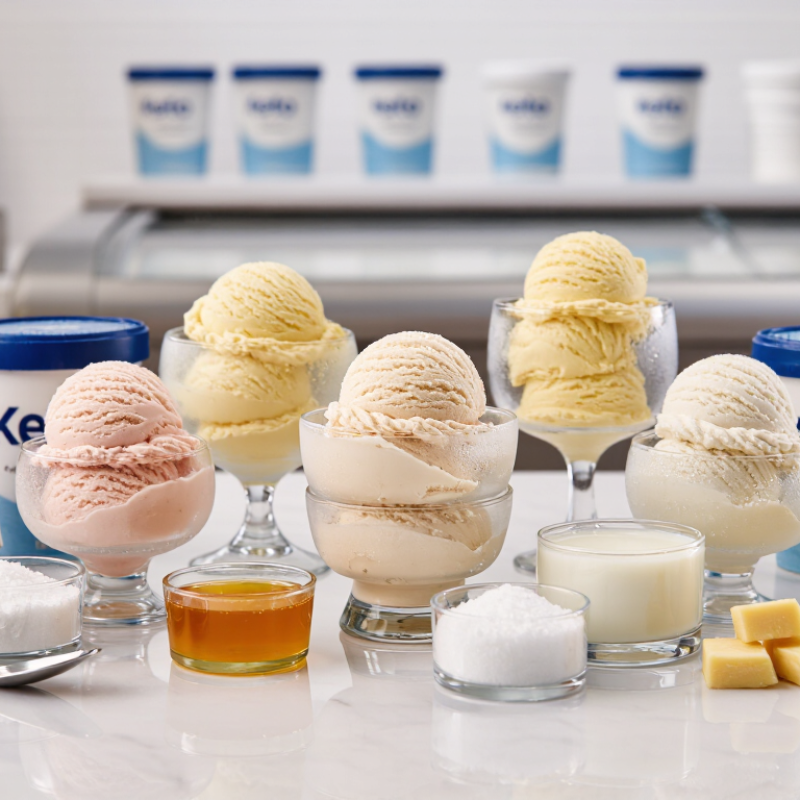
7 Keto Ice Cream Sourcing Tips for Global Buyers

Define Keto Ice Cream Standards for International Markets

Global buyers need a written keto ice cream standard before comparing suppliers. “Keto” has no single international definition. Set a maximum net carbohydrate level per serving, then state the calculation method clearly. Define serving size in grams. Do not rely on front-label claims alone. Specify acceptable sweeteners, fiber sources, protein levels, and total calories. Keep it measurable.

A strong sourcing checklist includes seven points: carbohydrate testing, ingredient traceability, allergen control, sensory quality, packaging stability, cold-chain performance, and documentation. Request recent laboratory reports and certificates of analysis for every production batch. Check whether testing covers net carbohydrates, sugars, polyols, and fiber. Review the ingredient list against the target market’s labeling rules. Small wording differences can create costly delays.

Cold-chain evidence matters. Ask for temperature records during storage, loading, and delivery. Inspect tubs after simulated transport, including ice crystal growth and lid deformation. Shelf-life data should reflect real distribution conditions, not only ideal factory storage. Samples should remain creamy after repeated temperature stress. That is difficult.

A practical weakness deserves attention: low-carbohydrate formulas may produce a cooling aftertaste or brittle texture. Run blind evaluations with local consumers before placing a large order. Suppliers should explain formulation changes, raw material substitutions, and batch deviations promptly. Maintain an approval file with specifications, test results, photos, and corrective actions. Standards should be strict, but review them when evidence changes.

Assess Suppliers’ Ingredients, Certifications, and Production Capabilities

7 Keto Ice Cream Sourcing Tips for Global Buyers

Assess suppliers’ ingredients, certifications, and production capabilities before discussing price or shipment volume. A reliable supplier should provide a complete ingredient specification, including net carbohydrates, sweetener levels, fiber sources, and fat percentages. Ask for current certificates of analysis for each production batch. Do not rely on a marketing sheet alone.

Request documentation for allergen controls, sanitation procedures, traceability, and shelf-life testing. Certifications such as HACCP, ISO 22000, or recognized organic standards may support due diligence, but their scope matters. Check the certificate number, issuing body, expiry date, and covered facility. Local import rules can differ sharply. Confirm labeling, additives, and nutrition claims with qualified regulatory professionals in each target market.

Production capability needs practical testing. Review freezer capacity, overrun control, filling accuracy, hardening systems, and cold-chain records. A supplier should explain how the product remains stable during loading, port delays, and final delivery. Ask for a pilot batch, not only a polished sample. Compare texture after several weeks at the intended storage temperature. Small issues often appear there. I have found that suppliers can describe excellent controls yet provide incomplete batch records. That gap deserves a written corrective-action plan. Visit the facility when possible, or arrange an independent audit with production-floor photographs and time-stamped records.

Verify Nutrition Claims, Product Quality, and Regulatory Compliance

7 Keto Ice Cream Sourcing Tips for Global Buyers

Verify every nutrition claim before reviewing the price. “Keto” should match the product’s declared carbohydrate profile and serving size. Request laboratory results for total carbohydrates, fiber, sugars, and sugar alcohols. Check whether the calculation method matches the destination market’s labeling rules. A tiny serving can make a weak formula appear impressive.

Ask for batch-specific certificates of analysis, not only marketing sheets. Review microbiological results, allergen controls, ingredient specifications, and shelf-life evidence. Inspect texture after temperature changes, including thawing and refreezing during transport. Ice crystals, separation, or a waxy finish may reveal poor formulation or cold-chain problems. Request retained samples from different production dates. One sample is not enough.

Regulatory compliance requires local review.

Confirm approved ingredients, permitted additives, nutrition panels, allergen statements, and required language. Claims about low sugar, reduced carbohydrate, or suitability for special diets may need supporting evidence. Packaging should match the actual formula. This sounds obvious, yet discrepancies still occur. Audit the facility when volumes justify the cost, and examine sanitation records, traceability, recall procedures, and storage controls. A supplier with clear answers is valuable. A confident answer without documents is not. I would also leave room for doubt: laboratory testing can vary, and regulations change. Recheck critical claims before each major shipment.

Compare Packaging, Cold-Chain Logistics, and Import Requirements

Global buyers should compare keto ice cream packaging as carefully as the recipe. A thin carton may collapse in humid ports. Use a sealed inner tub, tamper evidence, and insulation suited to the expected transit time. Check whether the material tolerates freezing without cracking. Clear recycling marks also help warehouse teams handle waste correctly. Packaging must protect texture, not only appearance.

Cold-chain performance depends on every handoff. Set a transport target of -18°C or colder, then confirm it with calibrated data loggers. Ask suppliers for loading records, pallet diagrams, and contingency plans for delays. Refrigerated trucks can still fail during customs inspections. Keep buffer time. A perfect route is rarely realistic. One detail is easy to miss: the product may soften during unloading, then refreeze with larger ice crystals. That damages eating quality.

Import requirements need early review in the destination market. Confirm the correct tariff classification, food facility documents, ingredient declarations, allergen statements, nutrition panels, and local-language labels. Keto positioning does not remove standard food controls. Sugar alcohols and sweeteners may require specific wording or limits. Request certificates of analysis for fat, carbohydrate, microbiological, and allergen checks. Requirements can change, so verify them with the relevant customs and food authorities before shipment. I would also compare minimum shelf life on arrival, not just the factory shelf life. That comparison often exposes an attractive price with impractical inventory risk.

Evaluate Costs, Sample Orders, and Long-Term Supplier Support

7 Keto Ice Cream Sourcing Tips for Global Buyers

Cost evaluation must go beyond the factory quotation. Grand View Research valued the global ice cream market at approximately $79.08 billion in 2023, with continued growth expected through 2030. This growth can increase demand for specialized low-sugar products, but it can also tighten ingredient and freezer capacity. Ask suppliers to separate costs for base ingredients, sweeteners, inclusions, packaging, testing, cold storage, and freight. Request pricing at three volumes. Small orders often hide high setup fees. Check minimum order quantities carefully.

Sample orders should test more than flavor. Request 12 to 24 units from at least two production batches, if possible. Measure texture after transport, seven days frozen storage, and repeated serving. Record carton temperature on arrival. A practical target is a complete document set, including ingredient specifications, allergen controls, nutrition calculations, and certificates of analysis. The International Refrigeration and Air Conditioning Institute highlights temperature control as essential for frozen product quality. Still, buyers sometimes trust one successful sample too quickly. That is a mistake worth admitting.

Long-term support needs written service levels. Require agreed response times, forecast reviews, replacement procedures, and notice periods for formula changes. Confirm whether the supplier can support multilingual labels and destination-market nutrition rules. Do not assume “keto” has one global definition. Local authorities may assess carbohydrate claims differently. Quarterly quality reviews can reveal small texture drift before customers notice. Supplier support sounds intangible. It directly affects landed cost, waste, and repeat orders.

7 Keto Ice Cream Sourcing Tips for Global Buyers - Evaluate Costs, Sample Orders, and Long-Term Supplier Support
Sourcing Tip Evaluation Dimension Practical Benchmark Sample-Order Check Long-Term Supplier Support Buyer Action
1. Compare the full landed cost Product price, packaging, freight, duties, cold storage, and local delivery Use a landed-cost model rather than comparing ex-works prices alone. Frozen products normally require temperature-controlled transport and storage. Request a written quotation for 1 carton, 1 pallet, and a full-container scenario in USD. Updated quotations when ingredient, freight, or energy costs change; clear Incoterms and payment terms. Calculate cost per serving and cost per sellable unit after expected melting, damage, and expiry losses.
2. Verify keto nutrition claims Net carbohydrates, total carbohydrates, fiber, polyols, added sugar, and serving size A keto positioning should be assessed against the target market’s rules. Do not assume “sugar-free” automatically means keto-friendly. Obtain the nutrition panel, ingredient specification, allergen statement, and laboratory test results for the finished product. Formula-change notifications, batch-level certificates of analysis, and documented control of sweetener quantities. Have an independent laboratory review carbohydrate calculations before making market-facing claims.
3. Start with a controlled sample order Minimum order quantity, sample cost, delivery condition, and product consistency A practical first test can include 3–5 flavors and enough units for sensory, shelf-life, packaging, and logistics checks. Inspect at arrival, after 24 hours, and after controlled thaw-and-refreeze abuse testing where appropriate. Ability to provide pilot quantities before committing to production-scale MOQs. Record texture, scoopability, flavor intensity, package condition, temperature, and delivery time for every sample.
4. Test cold-chain reliability Transit temperature, thermal packaging, data logging, storage temperature, and delivery handoff Many frozen products are stored at approximately −18°C or colder; the buyer should confirm the legal and product-specific requirement for the destination market. Use a temperature indicator or data logger and photograph cartons, seals, condensation, and damaged units on arrival. Defined excursion limits, contingency procedures, carrier coordination, and a documented claim process. Agree in writing who pays for rejected goods caused by temperature excursions or late delivery.
5. Review packaging and regulatory readiness Label language, allergens, nutrition format, net quantity, date coding, recycling marks, and import documents Requirements vary by destination. Common checks include ingredient declarations, allergen emphasis, lot identification, storage instructions, and country-of-origin information. Ask for editable artwork specifications, packaging material details, carton dimensions, and pallet configuration. Regulatory document support, artwork review, traceability records, and prompt notification of packaging changes. Obtain approval from a local food-labeling specialist before printing commercial packaging.
6. Assess quality and food-safety systems HACCP-based controls, allergen management, microbiological testing, traceability, and recall readiness The supplier should provide current food-safety documentation and batch records relevant to the product being purchased. Request a recent certificate of analysis, product specification, allergen matrix, and a traceability exercise or mock-recall summary. Root-cause analysis, corrective-action reports, audit cooperation, and retention of batch samples. Make quality documentation and agreed acceptance limits part of the supply contract.
7. Confirm scale-up and support capacity Production capacity, lead time, forecast flexibility, spare inventory, communication, and complaint handling Before launch, confirm standard production lead time, peak-season capacity, minimum remaining shelf life at dispatch, and order-change deadlines. Place a small repeat order to test consistency, response speed, documentation, and on-time delivery—not only taste. Quarterly business reviews, demand forecasting, safety-stock planning, technical troubleshooting, and service-level targets. Use a supplier scorecard covering quality, delivery, responsiveness, documentation, temperature control, and total cost.
Buyer note: Benchmarks are general procurement guidelines. Actual costs, MOQs, lead times, labeling requirements, and storage conditions depend on the formula, destination market, season, shipping lane, and applicable regulations. Confirm all commercial and regulatory details with the supplier and qualified local advisers.