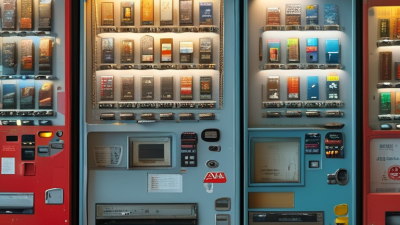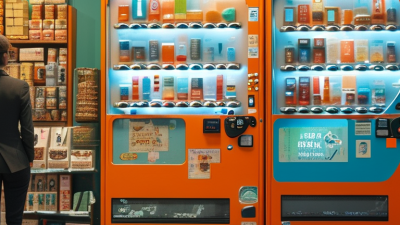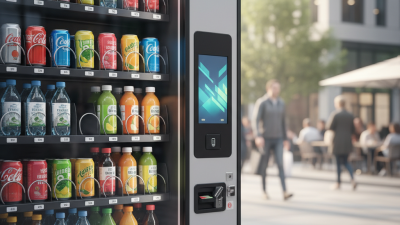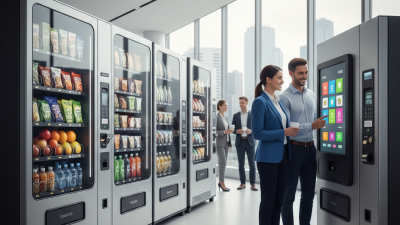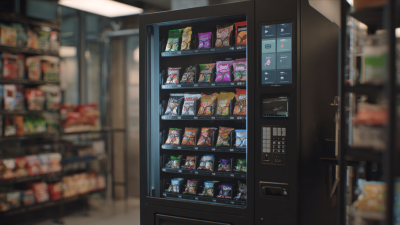
Global buyers are rethinking how people access cash, goods, and self-service support. The modern atm vending machine now combines secure cash dispensing, touchscreens, payment tools, remote monitoring, and compact retail functions. It may serve a hotel lobby, transport station, pharmacy, university, or rural community.
The World Bank’s Global Findex 2021 reports that 76% of adults worldwide held an account. Yet access remains uneven, especially where branches are distant or digital infrastructure is unreliable. Cash still matters. RBR Data Services’ Global ATM Market and Forecasts reports track ATM installations, deployment patterns, software, and changing cash-use behavior across major markets. These findings suggest that buyers should compare more than price. Security certification, uptime, replenishment access, weather protection, screen visibility, and local service support can decide whether a machine succeeds.
Mike Lee, CEO of the ATM Industry Association, has described the industry’s direction this way: “The ATM is evolving.” That short observation deserves attention. A machine outside a busy station needs different features from one inside a quiet village store. Some models prioritize high cash capacity. Others focus on contactless payments, product dispensing, or flexible branding. Small details matter.
Not every popular model fits every market.
This guide examines ten atm vending machine types for global buyers. It considers practical use cases, operating environments, technical features, and purchasing risks. The categories are useful, but not perfect. Local regulations, currency design, maintenance skills, and customer habits can change the final choice. Careful evaluation remains essential.
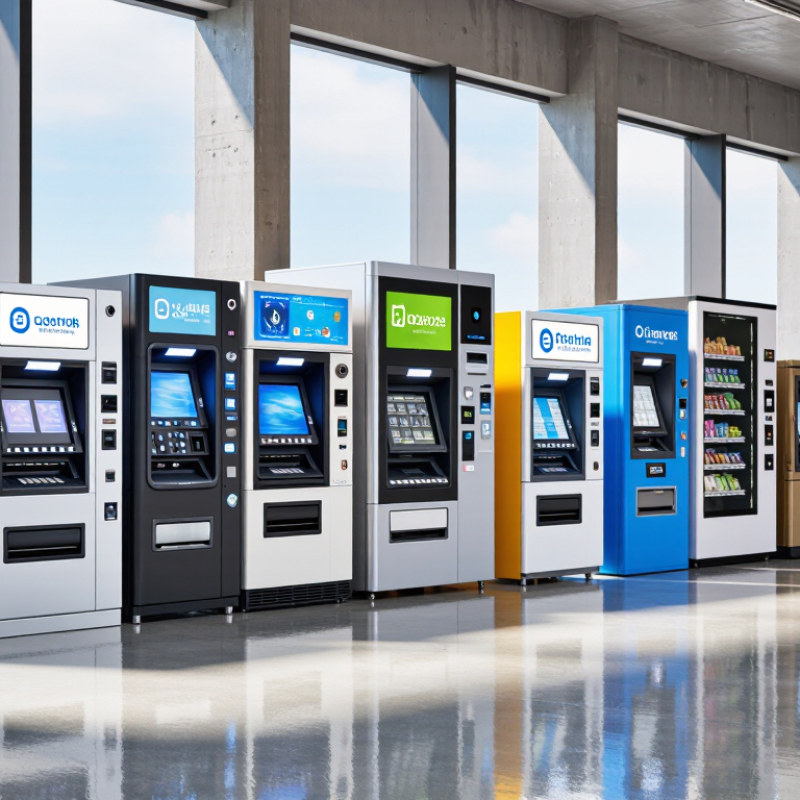
An ATM vending machine is an automated retail kiosk that accepts payment and releases selected goods without constant staff support. Unlike a cash machine, it sells physical products through a controlled dispensing system. The core parts include a product cabinet, payment interface, stock sensors, software, and a secure delivery bay.
A reliable unit should show clear prices, support common payment methods, and confirm each transaction. It should also prevent double dispensing, protect products from heat, and record inventory accurately. In real installations, small details matter. A bright screen helps in poor lighting. A wide collection opening improves accessibility. A stable cooling system protects temperature-sensitive goods.
The best type depends on the product, location, climate, and service plan. Beverage machines need strong cooling and spill control. Fresh-food units require stricter temperature monitoring. Personal-care and convenience machines may need compact shelves and flexible product spirals. Outdoor models need weather-resistant housing and stronger locks.
There is no single global definition. Some buyers use “ATM vending machine” for any automated retail cabinet, which can create confusion. A practical evaluation should examine safety certifications, local payment compatibility, remote monitoring, spare-part access, and cleaning procedures. Field testing remains essential. A machine can look advanced yet perform poorly during peak hours or network interruptions. That uncomfortable possibility deserves attention before purchase.
Top 10 ATM Vending Machine Types for Global Buyers
Global buyers can choose from ten practical ATM types: indoor cash dispensers, outdoor weatherproof units, drive-up machines, wall-mounted models, freestanding terminals, compact lobby units, cash-recycling ATMs, deposit-enabled machines, multilingual kiosks, and accessibility-focused terminals. Each type serves a different location and user pattern. A compact unit may suit a small hotel, while a weatherproof model needs sealed panels, temperature control, and strong lighting. Weather protection matters.
Field evaluations show that placement often affects performance more than screen size. Buyers should check local currency support, network reliability, receipt capacity, cash storage, and maintenance access. Deposit-enabled and cash-recycling models can reduce refill visits, but they usually require more complex servicing. Accessibility features should include reachable controls, clear audio guidance, tactile markings, and enough space for wheelchair users. Security should include reinforced housing, privacy shields, tamper alerts, and complete audit records.
A polished interface does not guarantee reliable operation. Poor ventilation, weak connectivity, or difficult cassette access can create expensive downtime. I would request service records, safety certifications, software update procedures, and independent testing before approving a purchase. Local regulations also affect installation, data handling, surveillance, and cash management. Requirements differ widely. Some buyers focus too heavily on purchase price. That is understandable, but lifecycle costs often reveal the better choice. A cheaper ATM may consume more power, need frequent technician visits, or lack replacement parts after several years. The strongest decision combines verified performance, lawful deployment, user accessibility, and realistic after-sales support.
ATM vending machines differ mainly by the products they handle and the functions they provide. Snack machines use spiral coils for sealed foods, while beverage machines need stronger lifts and cooling systems. Combination machines sell both categories in one cabinet. Fresh-food machines add temperature monitoring and shorter restocking cycles. Frozen-food units require stable low temperatures and insulated storage. Coffee machines depend on water filtration, grinding, heating, and cup dispensing. Personal-care machines usually offer compact compartments for toiletries and hygiene items. Electronics-accessory machines protect small products behind secure delivery slots. Stationery machines suit schools and offices. Pet-supply machines serve owners near parks or residential areas.
Product design changes the operating requirements. A chilled sandwich needs sensors, date control, and careful rotation. A phone cable needs product locks, clear pricing, and reliable drop detection. Payment options may include cards, mobile wallets, coins, or cashless terminals. Remote monitoring can show inventory levels, temperature alerts, sales data, and service faults. Accessibility also matters, including screen height, readable instructions, and simple payment steps.
Real sites are less tidy than product categories suggest. A beverage machine may sell snacks better than expected. A fresh-food unit can lose money when demand changes suddenly. I would test one location before buying many machines. Weather, electricity quality, cleaning routines, and local buying habits can change performance. The best choice is not always the most advanced model. Sometimes, simple equipment works better. That judgment needs records, site visits, and honest maintenance feedback.
Global buyers should evaluate ten ATM formats: indoor lobby, freestanding, through-the-wall, drive-up, wall-mounted, cash-recycling, deposit, assisted-service, mobile, and smart ATMs. Each format creates different installation and compliance risks. A through-the-wall unit needs stronger façade protection. A mobile unit needs secure connectivity and location controls. Cash remains relevant: the European Central Bank’s 2024 SPACE study reported that cash represented 52% of euro-area point-of-sale payments in 2024. The Federal Reserve’s 2024 Diary also found cash accounted for 16% of U.S. consumer payments in 2023.
Security must be designed in layers. Buyers should require encrypted communications, anti-skimming protection, hardened card readers, surveillance integration, secure boot, and tamper detection. PIN entry devices should align with PCI PIN Security Requirements and PCI PTS approval expectations. EMV chip acceptance remains important, but it does not remove every fraud risk. Physical locks, controlled service access, and audit logs still matter. Small failures become expensive.
Compliance varies by country and sometimes by municipality. Check accessibility rules, electrical certification, privacy obligations, cash-handling controls, and local fire requirements before purchasing. The ATM should support secure software updates and documented vulnerability management. ISO 27001-style governance can improve operational discipline, although certification alone proves little. A checklist may miss real-world weaknesses, especially poor technician practices or exposed network cabinets. Test the machine under heat, dust, unstable power, and repeated customer use. That is where elegant specifications often become less convincing.
Typical global standards, security, and compliance coverage by ATM type
The index counts seven commonly applicable requirement domains: EMV card acceptance, PCI PIN security, PCI PTS hardware protection, ISO 9564 PIN handling, cash protection, accessibility, and AML/KYC controls. Higher values indicate broader compliance coverage typically required for deployment; local licensing, privacy, accessibility, and payment rules must still be verified in each target market.
Reference frameworks include EMV specifications, PCI PIN Security, PCI PTS, ISO 9564, accessibility requirements, and jurisdiction-specific AML/KYC regulations. Values are a comparative compliance-domain count, not market-share data or a certification.
Choosing the right ATM vending machine starts with local behavior, not machine appearance. The World Bank’s Global Findex 2021 reports that 76% of adults worldwide have an account, while 1.4 billion remain unbanked. Markets with limited banking access may need simple cash-dispensing units, assisted interfaces, and offline transaction support. Urban markets often require deposit-capable, cash-recycling, or multi-function machines.
Cash habits still matter. The European Central Bank’s SPACE 2022 study found that cash represented 59% of point-of-sale payments in the euro area. A compact cash dispenser may suit transport hubs, while a weather-resistant outdoor model fits rural shops or fuel stations. Check local currency sizes, power stability, network coverage, lighting, and accessibility before selecting hardware. Small details decide uptime.
Security and servicing must match the market’s real conditions. Look for encrypted communication, camera coverage, tamper detection, remote monitoring, and clear audit records. The World Bank’s Global Findex also shows growing digital payment use, but cash demand has not disappeared. A hybrid machine can therefore serve both cash users and account-based customers. I would not choose the cheapest unit first. It may consume more through repairs, cash replenishment, and downtime. That assumption needs testing with a short pilot, transaction logs, and feedback from actual users. Reliability is never proven by a brochure.
| # | ATM Vending Machine Type | Primary Use Case | Typical Location | Cash Dispensing | Approx. Cash Capacity | Connectivity | Best-Fit Market Conditions | Key Selection Considerations |
|---|---|---|---|---|---|---|---|---|
| 1 | Indoor Lobby ATM | Routine cash withdrawals, balance inquiries and basic account services | Bank lobbies, supermarkets, malls and office buildings | Single or multi-cassette dispensing | About 1,000–3,000 notes, depending on cassette configuration | Wired Ethernet; optional cellular backup | Controlled indoor environments with regular staff or service access | Prioritize compact dimensions, accessibility, local transaction standards and easy replenishment. |
| 2 | Through-the-Wall ATM | Exterior-facing self-service banking with rear maintenance access | Branch façades, retail walls, transport hubs and commercial complexes | Multi-cassette dispensing with optional deposit modules | About 2,000–4,000 notes in common configurations | Wired network, cellular failover and remote monitoring | Markets requiring 24-hour access and strong physical security | Check wall depth, climate protection, rear-clearance requirements, lighting and local accessibility rules. |
| 3 | Freestanding Indoor ATM | Independent cash access where permanent wall installation is impractical | Hotels, convenience stores, entertainment venues and campuses | Usually one or two cash cassettes | About 800–2,500 notes | Ethernet, Wi-Fi where permitted or cellular connectivity | High-footfall indoor sites with limited construction flexibility | Compare footprint, anchoring options, power requirements, noise level and service access. |
| 4 | Outdoor Weather-Resistant ATM | Cash access in exposed or semi-exposed public areas | Outdoor retail areas, fuel stations, public squares and rural service points | Multi-cassette dispensing; optional receipt and deposit functions | About 1,500–4,000 notes | Ethernet or cellular with remote status alerts | Hot, cold, humid, dusty or rain-prone operating environments | Verify operating temperature range, ingress protection, corrosion resistance, lighting and vandal resistance. |
| 5 | Drive-Up ATM | Transactions completed from a vehicle for convenience and rapid throughput | Branch driveways, roadside locations and parking facilities | High-volume multi-cassette dispensing | About 2,000–4,000 notes, subject to replenishment schedule | Dedicated wired connection with cellular backup recommended | Car-oriented regions with adequate vehicle access and site visibility | Assess lane geometry, screen height, speaker clarity, weather protection and traffic safety. |
| 6 | Cash Recycling ATM | Deposits and withdrawals using deposited banknotes to reduce cash logistics | Branches, retail banking centers and cash-intensive locations | Recycles validated notes; may include conventional cassettes | Often 2,000–6,000 notes across recycling and storage modules | Secure wired network with continuous monitoring preferred | Markets with reliable deposit demand and established cash-management processes | Confirm supported currencies, note-quality rules, counterfeit detection, reconciliation and maintenance procedures. |
| 7 | Cash Deposit and Withdrawal ATM | Expanded self-service banking with cash and envelope or cheque deposit options | Bank branches, business districts and community service centers | Multi-cassette dispensing with deposit acceptance | About 1,500–4,000 dispense notes plus deposit storage capacity | High-availability wired network with secure remote diagnostics | Markets where customers still depend heavily on cash deposits | Evaluate deposit validation, audit trails, receipt detail, cash-in-transit procedures and regulatory requirements. |
| 8 | Contactless-Enabled ATM | Cardless or tap-to-authenticate withdrawals alongside conventional card use | Urban branches, transit areas, campuses and digital-banking hubs | Usually one or more standard cash cassettes | About 1,000–3,000 notes | Secure IP connection; contactless reader and mobile-authentication support | Markets with strong smartphone, contactless payment and digital-banking adoption | Check contactless transaction standards, token security, user privacy, fallback methods and accessibility. |
| 9 | Compact Rural or Micro-Branch ATM | Essential cash access where space, power and service infrastructure are limited | Small towns, remote communities, clinics, schools and local stores | Single or compact dual-cassette dispensing | About 500–2,000 notes | Cellular, satellite-compatible or low-bandwidth IP connectivity | Low-density areas with infrequent replenishment and inconsistent infrastructure | Prioritize low power consumption, offline resilience, remote monitoring, service intervals and cash forecasting. |
| 10 | High-Security Cash Vending ATM | Large-volume cash distribution in locations with elevated security risks | Transport terminals, border areas, casinos and major commercial centers | High-capacity multi-cassette dispensing with enhanced protection | About 3,000–8,000 notes, depending on configuration | Redundant network links, alarm integration and centralized monitoring | High-traffic, high-value or higher-risk environments requiring strong controls | Review safe construction, anti-skimming features, alarm interfaces, surveillance coverage and cash-in-transit access. |