What Is a Manufacturing Vending Machine?

A manufacturing vending machine is not a snack dispenser beside the break room. It is a controlled point of access for tools, safety supplies, and production materials. A technician can scan a badge, select a drill bit, and collect it from a locked compartment. The transaction is recorded. That small detail can make a difference when items disappear between shifts.

These machines help manufacturers manage supplies closer to where work happens. They can track usage, set access rules, and alert staff when stock runs low. Yet the machine is only one part of the system. Poorly chosen inventory, unclear restocking responsibilities, or unreliable data can undermine its value. Real plants are messy. A machine cannot fix every process problem.

Lean manufacturing pioneer Taiichi Ohno wrote, “Where there is no standard, there can be no improvement.” His observation applies to manufacturing vending machines: consistent rules for issuing and replenishing items make results easier to measure. The right setup depends on the facility, its workers, and the supplies being managed. This guide explains what manufacturing vending machines are, how they work, and where they can help. It also considers their limits, because convenience alone does not guarantee better control.
What Is a Manufacturing Vending Machine?

What Defines a Manufacturing Vending Machine in MRO Inventory Management?

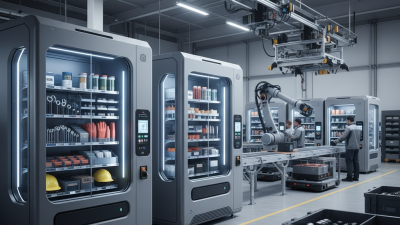
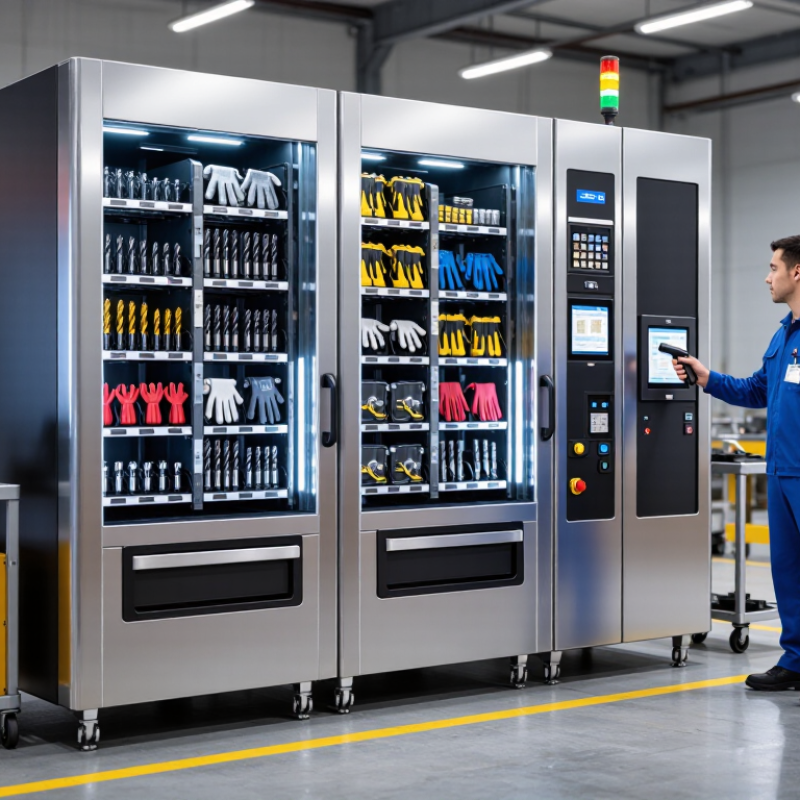
A manufacturing vending machine is an automated cabinet for controlling MRO inventory. In MRO inventory management, it stores maintenance, repair, and operations supplies near the point of use. It dispenses approved items after employee identification, such as a badge, PIN, or secure scan. Common contents include gloves, cutting tools, filters, fasteners, and electrical components. Each transaction records the user, item, quantity, and time.

The defining value is controlled availability, not simple product storage. A maintenance technician can collect a bearing at 2 a.m. without searching a distant storeroom. The system updates inventory immediately. It can also limit quantities, assign costs, and trigger replenishment when stock reaches a defined level. Stock levels need regular review. Demand changes during shutdowns, new equipment installations, or seasonal production.

A reliable program depends on accurate item data and practical machine placement. Poor descriptions can cause workers to select the wrong part. Empty slots can delay urgent repairs. In field reviews, I have found that convenience sometimes encourages unnecessary withdrawals. That weakness deserves attention. Supervisors should compare usage records with work orders and investigate unusual patterns. Machines also require cleaning, software checks, and physical inspection. They are tools, not replacements for inventory discipline. Clear ownership between maintenance, purchasing, and operations makes the data more useful.

How Do Badge, Barcode, RFID, and IoT Systems Control Access?

What Is a Manufacturing Vending Machine?

A manufacturing vending machine is a controlled cabinet for tools, safety equipment, and production supplies. It releases items only after verifying an authorized user. On a production floor, this reduces misplaced stock and records every withdrawal. The real value depends on accurate access data, not the cabinet alone.

Badge systems use an employee card or secure identification token. A worker taps the reader, and the controller checks permission, shift, and location. Barcode systems identify users or items through printed labels and scanners. They are affordable and easy to replace. Yet labels tear. RFID uses radio signals to identify tagged items without direct scanning. This helps when workers handle gloves, components, or tools with both hands. However, metal surfaces and crowded storage areas can reduce reading accuracy.

IoT connectivity adds another layer. Sensors can report stock levels, door openings, temperature, and unusual access patterns. Supervisors may receive alerts before a critical item disappears. That sounds efficient. It is not flawless. Poor network coverage can delay records, while incorrect permissions can block trained workers. A reliable system should combine clear access rules, routine audits, and readable activity logs. It should also support manual review when technology behaves unexpectedly. Security improves when access data is limited to legitimate operational needs and retained only as long as necessary.

Which Items Can Be Dispensed, from PPE to Cutting Tools?

What Is a Manufacturing Vending Machine?

Which Items Can Be Dispensed, from PPE to Cutting Tools?

A manufacturing vending machine stores frequently used supplies near the production line. Workers access approved items with an employee card, PIN, or secure identification method. The machine records each withdrawal, department, time, and quantity. This creates clearer usage data than an open cabinet.

PPE is a common choice. Machines can dispense safety glasses, earplugs, gloves, protective sleeves, masks, and disposable coveralls. Some facilities also stock face shields and replacement filters, where local safety rules permit them. Correct sizing matters. A glove that is too loose may reduce grip and create a hazard.

Cutting tools are also suitable for controlled dispensing. Common examples include drill bits, milling cutters, turning inserts, saw blades, deburring tools, and abrasive wheels. The machine can release tools by job, machine type, or approved quantity. It may also warn staff when stock is low or a tool needs inspection.

Not every item belongs inside one machine. Heavy tooling, temperature-sensitive products, and equipment requiring individual fitting may need separate storage. A practical setup needs accurate product data and regular checks. Otherwise, the screen may show stock that is missing. That problem is easy to overlook.

Clear labels help. So do simple access rules. Workers still need training, especially when handling sharp tools or respiratory PPE. The machine controls distribution, but it cannot replace risk assessment, supervision, or proper maintenance.

How Does Transaction Data Support Replenishment and Usage Tracking?

What Is a Manufacturing Vending Machine?

A manufacturing vending machine stores controlled supplies near the work area. It records each authorized dispense, return, and stock adjustment. Transaction data then connects usage with a worker, machine, shift, or production order.

This visibility supports replenishment. When a bin reaches its reorder level, the system can create a purchasing signal. The 2023 MHI Annual Industry Report found that 74% of surveyed supply-chain professionals planned to increase technology investment. That trend reflects a practical need: fewer emergency runs and better inventory control. The machine can also reveal unusual consumption. For example, a sudden increase in glove withdrawals may indicate higher output, damaged stock, or poor handling. The data raises questions, not just answers.

Usage tracking becomes more useful when records include timestamps and location details. A supervisor can compare weekday and night-shift consumption without relying on memory. The 2023 Deloitte Global Chief Procurement Officer Survey reported that digital visibility remains a major procurement priority. However, transaction accuracy depends on disciplined use. A missed scan creates a false balance. An incorrect employee ID can distort accountability. The system is not perfect.

Manufacturers should review exception reports regularly. They can compare issued quantities with production volume, scrap records, and maintenance schedules. That comparison may identify waste, overuse, or an incorrect reorder point. Human review still matters, especially when unusual demand has a valid operational reason.

Why Inventory Control Matters in U.S. Manufacturing, a $2.3 Trillion Sector in 2018?

What Is a Manufacturing Vending Machine?

A manufacturing vending machine is a controlled storage unit for tools, fasteners, gloves, and other supplies. Workers receive items through an authorized process. The system records each withdrawal, employee, time, and quantity. It brings inventory closer to the work area. It also reduces uncontrolled access to shared materials.

Inventory control matters greatly in U.S. manufacturing. In 2018, this sector represented about $2.3 trillion in economic output. Even small supply losses can multiply across factories, shifts, and production lines. A missing cutting tool may delay one task. A stockout of protective gloves can interrupt an entire work cell. Overstock creates another problem: cash remains tied up on shelves.

The strongest systems use clear usage limits and regular replenishment checks. Data can reveal unusual consumption, repeated emergency orders, or supplies that expire unused. A supervisor might notice that one line uses twice as many drill bits as another. That detail deserves investigation, not blame. The cause could be poor material quality, incorrect settings, or incomplete training.

It is not a perfect fix. If item settings are wrong, the machine can hide waste instead of reducing it. Employees may also bypass the process when access feels slow. Practical feedback still matters. A reliable program combines recorded data with floor-level observation, maintenance records, and honest conversations with operators.