2026 Top Vending Coffee Machine Suppliers Worldwide?
In 2026, vending coffee is becoming a practical service for offices, hospitals, campuses, hotels, and transport hubs. Modern machines can grind beans, manage milk, process cashless payments, and serve drinks within minutes. Yet impressive screens do not guarantee reliable performance. This guide introduces leading vending coffee machine suppliers worldwide and explains what separates a durable system from a polished display.
The evaluation focuses on practical evidence. Important factors include brewing consistency, ingredient storage, cleaning access, energy use, payment integration, and after-sales support. A machine may produce a smooth cappuccino at a trade show, then struggle during a busy Monday morning. Real operating conditions matter more. Suppliers should provide clear specifications, training resources, maintenance schedules, and responsive technical assistance. Regional electrical standards, food safety expectations, and payment requirements also deserve careful review.
Price remains important, but the lowest quotation can become expensive after repeated service visits. We consider total ownership costs, spare-part availability, warranty terms, and software updates. Customer feedback can reveal useful patterns, although it is rarely complete or perfectly neutral. Some rankings may change as new suppliers enter the market or established brands improve their platforms. That uncertainty is worth acknowledging. Buyers should test sample drinks, inspect internal components, and request references from similar locations. A dependable supplier is not always the most famous one. It is the partner that performs consistently when the queue is long, the milk is low, and the operator needs help quickly.
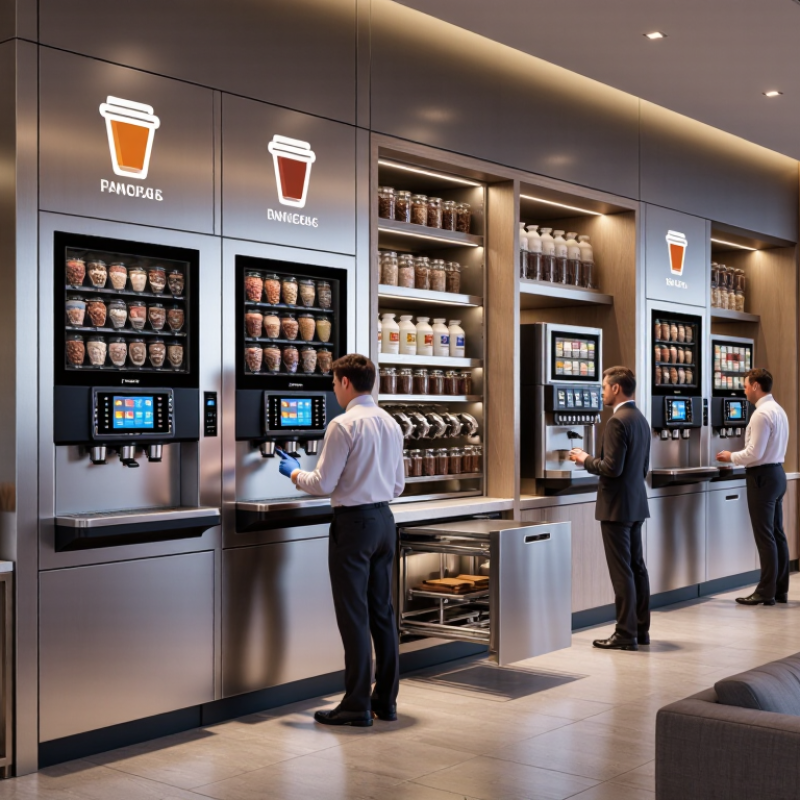
What Defines a Leading Vending Coffee Machine Supplier in 2026
A leading vending coffee machine supplier in 2026 must deliver more than attractive equipment. It needs dependable brewing, transparent maintenance, and measurable cup quality. The International Coffee Organization estimated global coffee consumption at 177.9 million 60-kilogram bags in 2023/24. That demand raises expectations in offices, hospitals, transport hubs, and campuses.
Operational evidence matters. A serious supplier should publish uptime records, service response times, spare-parts availability, and energy data. The International Energy Agency reports that buildings account for about 30% of global final energy consumption. Efficient heating systems and standby controls therefore affect operating costs.
Digital payment support, remote diagnostics, and usage dashboards also reduce avoidable service visits. However, data alone can mislead. A machine with impressive software may still produce weak coffee during its busiest morning period. Cup temperature, grinder calibration, cleaning access, and water filtration deserve on-site testing.
Tips:
Request a live demonstration using your local water and coffee recipe. Ask for maintenance logs, not only brochures. Check whether technicians can reach your site within an agreed time. Include waste reduction in the contract.
A reliable supplier also understands human behavior. Clear screens, short queues, accessible controls, and multilingual instructions improve daily use. The Global Coffee Platform continues to highlight supply-chain risks linked to climate pressure and farmer resilience. Suppliers should explain sourcing policies without vague sustainability claims.
I would still question every forecast. Market reports can describe growth, but they rarely show how a machine performs at 8:15 a.m. on a rainy Monday.
Key Types of Vending Coffee Machines and Their Applications
Coffee vending machines are not one uniform category. Each design fits a different operating environment, service expectation, and customer volume.
Bean-to-cup machines grind whole beans before brewing. They suit offices, hotels, and premium workplace lounges where aroma matters. However, grinders need regular cleaning and calibration.
Instant coffee machines dissolve prepared powder quickly. They work well in factories, hospitals, and transport areas with heavy traffic. Their smaller footprint can simplify installation, though taste may feel less fresh.
Pod-based machines offer controlled portions and simple training. They are practical for meeting rooms, serviced apartments, and smaller offices.
Fresh-brew machines prepare larger batches, making them useful for cafeterias and busy public locations.
A machine with chilled milk storage adds beverage variety, but it also increases temperature-monitoring duties.
Keep that in mind.
Experienced buyers should match capacity with peak demand, not average demand. A commuter station may need rapid dispensing, wide payment options, and durable doors. A hospital requires quiet operation, clear allergen information, and strict cleaning records. Schools may need safer drink temperatures and restricted ingredient choices. Water filtration, accessible controls, remote fault alerts, and spare-part availability also affect long-term reliability.
I have seen attractive machines underperform because refill access was poorly planned. A supplier should provide installation guidance, hygiene training, maintenance response times, and transparent warranty terms. Independent testing documents can support claims about electrical safety and food-contact materials.
A perfect machine does not exist. Site measurements, local service coverage, and real usage trials should influence the final decision.
Global Regions and Markets for Vending Coffee Machine Suppliers
2026 Top Vending Coffee Machine Suppliers Worldwide
Global demand for vending coffee machines is becoming more regional. Europe favors compact machines, strict energy controls, and strong espresso quality. Office buildings, hospitals, and transport hubs remain important buying locations. Suppliers must provide clear maintenance plans and dependable parts access.
Asia-Pacific shows fast growth in offices, universities, convenience stores, and manufacturing sites. Customers often expect quick service, cashless payment, and adjustable sweetness. Japan, South Korea, Singapore, and Australia have different safety and service expectations. A supplier with local technicians usually performs better than one offering only remote support.
North America values large drink choices, simple operation, and remote monitoring. Latin America may prioritize price, durability, and flexible financing. The Middle East often needs machines suited to hot, dusty environments. Africa presents varied opportunities, especially in urban workplaces and public facilities. Market data can change quickly. My practical view is that suppliers should test each location instead of copying one regional model.
Tips: Check water quality, power stability, payment habits, and daily cup volume before choosing equipment. Ask for response times, spare-part availability, cleaning procedures, and training records. Compare the full operating cost, not only the purchase price. A low-cost machine can become expensive when service is slow. Local feedback matters.
2026 Top Vending Coffee Machine Suppliers Worldwide?
Global Regions and Markets for Vending Coffee Machine Suppliers
Regional coffee production provides a measurable proxy for raw-material availability and the scale of coffee-service markets relevant to vending machine supply. South America represented the largest production base in the 2022/23 coffee year, followed by Asia & Oceania. The figures show regional coffee production, not supplier revenue or market share.
Source: International Coffee Organization (ICO), regional coffee production statistics for the 2022/23 coffee year. Unit: million 60-kg bags.
Emerging Technologies Shaping Vending Coffee Machines in 2026
2026 Top Vending Coffee Machine Suppliers Worldwide?
In 2026, leading suppliers are designing vending coffee machines around measurable reliability, not flashy screens alone. Edge AI can monitor brewing pressure, water temperature, and grinder vibration in real time. This helps technicians identify wear before a customer receives a weak or bitter cup. Some machines now adjust extraction settings according to bean density, humidity, and drink size. Small sensors matter.
Touchless ordering and smart monitoring
Touchless ordering is also becoming more practical. Customers can use QR interfaces, mobile wallets, or voice-assisted menus where local rules permit. Internal sensors track milk temperature, water quality, ingredient levels, and waste volume. Operators receive alerts when a filter needs replacement or a powder container is nearly empty. These records support clearer maintenance decisions and more consistent hygiene checks.
Energy efficiency and practical automation
Energy efficiency is shaping machine design as well. Improved insulation, standby controls, and compact heating systems can reduce power use during quiet periods. Modular components may shorten repair time and reduce unnecessary disposal. However, automation is not perfect. Sensors can drift, connectivity can fail, and an algorithm may misread unusual demand. Suppliers still need trained service teams, transparent data practices, and simple manual controls. A carefully tested machine often serves users better than a complicated one.