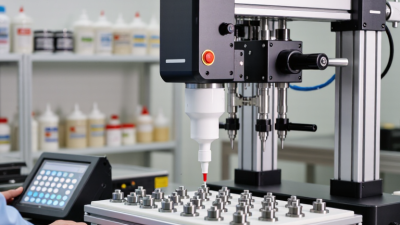
A dispensing machine can look simple on a product page: a pump, nozzle, controller, and frame. The hard part is making each component work reliably with your material, production speed, and maintenance capacity. A machine built for low-viscosity liquids may struggle with pastes or abrasive compounds. Small differences matter.
Automation provides useful context. The International Federation of Robotics reported 4,281,585 industrial robots operating worldwide in 2023, up 10% from 2022. This figure describes industrial robots, not dispensing machines, but it signals the scale of factory automation buyers are navigating. Market reports also use “dispensing machine” broadly, covering equipment with very different uses. Compare like with like.
Automation expert Bill Gates wrote in Business @ the Speed of Thought: “The first rule of any technology used in a business is that automation applied to an efficient operation will magnify the efficiency. The second is that automation applied to an inefficient operation will magnify the inefficiency.” It is a useful warning for equipment buyers. More speed is not always better. A machine cannot fix an unclear process.
This guide examines top dispensing machine manufacturers for global buyers. It focuses on application fit, dosing accuracy, controls, changeover time, technical support, and spare-part access. Ask for sample tests using your actual material. Check cleaning steps and service response times, too. A glossy demo is not enough. Some comparisons remain imperfect because suppliers publish specifications in different ways. That deserves scrutiny. The right choice depends on measurable performance, not a polished brochure.
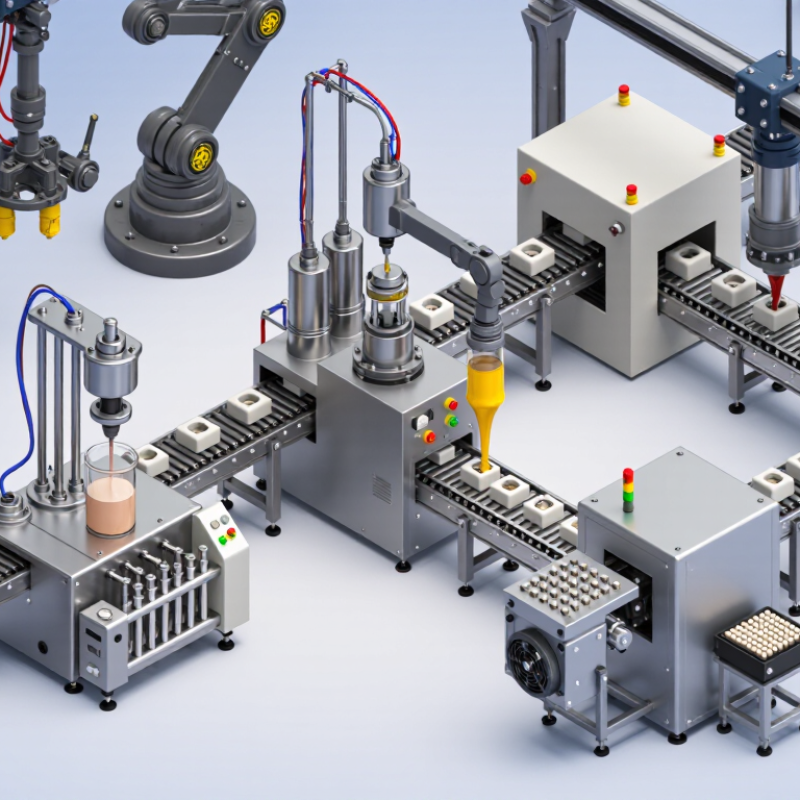
A dispensing machine measures and releases a set amount of material at a chosen location. It may handle liquid, paste, or adhesive. Common uses include applying sealants to appliance housings, lubricants to moving parts, and coatings to electronic components. Small errors matter. A nozzle that sits too high can leave a thin, uneven bead; excess material can slow assembly or create waste.
On a workbench, an operator might load a syringe, set the dose, and test several parts before production begins. In a factory cell, dispensing equipment may work with sensors or robotic arms to repeat the same path. The International Federation of Robotics’ World Robotics 2024 report recorded 541,302 industrial robot installations in 2023, with 4,281,585 robots operating worldwide. Those figures describe industrial robots broadly, not dispensing machines specifically, but they show the scale of factory automation surrounding these tools. A machine still needs the right fluid, nozzle, pressure, and curing time. A clean-looking bead can hide a weak bond. That is why operators inspect samples and adjust settings rather than trusting the first run.
Choosing a dispensing machine manufacturer starts with the material and process, not a catalogue photo. A machine handling a thin fluid may behave differently with a thick adhesive or abrasive paste. Ask whether the supplier can test your actual material, container, and target dose. Request results across repeated cycles, not one attractive sample. Small details matter.
Accuracy should be documented under stated conditions. Check dose variation, cycle speed, nozzle options, and performance after pauses or temperature changes. Ask how operators prime, purge, and clean the system, and how much product remains in the line. These details affect waste and uptime. A clear setup guide and accessible spare parts are practical signs of support. Ask for evidence.
Controls should fit the line: a foot pedal, timed shot, or integration with existing equipment may suit different workflows. Confirm that guarding, electrical documentation, and training fit your site. Service response matters too; ask who handles troubleshooting and which parts are stocked locally. Compare operating costs, not only purchase price. A successful factory trial cannot reproduce every shift, operator, or material batch. Plan a monitored acceptance test at your facility before final sign-off.
Leading dispensing machine manufacturers for global buyers should offer more than an impressive catalogue. A reliable supplier can explain how its equipment handles material viscosity, operating temperature, and required output. Ask for a demonstration using a material similar to yours. Watch for dripping, uneven bead width, and slow cycle recovery. These small details can affect product quality on a busy production line.
Tips: Request sample parts, maintenance schedules, and clear documentation. Check whether operators can adjust flow rate and dispensing time without specialized tools. Confirm spare-part availability and remote support in your region. A polished sales presentation is useful, but it cannot replace a practical trial.
Compare manufacturers on setup, cleaning, and changeover time, not just purchase price. A machine that performs well in a short test may behave differently after hours of continuous use. Ask how performance is verified and what conditions the test used. It is also worth checking whether controls and manuals suit your team’s experience. No system is perfect; even a capable machine may need tuning for a new material or process. A candid supplier should discuss those limits and help define realistic acceptance criteria before delivery.
Dispensing machine manufacturers differ in control quality, customization depth, and the support available after installation. A stable system should deliver consistent shots despite changes in viscosity, temperature, or production speed. Ask how the supplier verifies repeatability, and request test results using your actual material. A clean demo is not the whole story. Deloitte’s 2024 Smart Manufacturing Survey found that 92% of surveyed manufacturers viewed smart manufacturing as a key driver of competitiveness over the next three years. The survey covers manufacturing broadly, not dispensing equipment specifically, but it shows why controls and data access matter.
Customization can mean more than a special nozzle. It may include recipe storage, heated hoses, vision checks, or integration with an existing line. These changes add value only when they solve a defined process problem. There is a trade-off, and it is easy to underestimate it: extra features can complicate cleaning, training, and maintenance. Compare lead times for replacement parts, remote troubleshooting hours, and operator training before choosing. Get support commitments in writing.
Tips: Send shortlisted manufacturers the same material, target dose, and cycle-time requirements. Ask for a sample run, then inspect the bead or drop for gaps, stringing, and variation. Keep one question open: who helps when the machine drifts six months later?
| Supplier Profile | Typical Technology Focus | Common Applications | Customization and Integration | Support Considerations | Best Fit for Buyers |
|---|---|---|---|---|---|
| Precision Fluid-Dispensing Specialist | Metering and valve systems for controlled deposits, beads, dots, and fills. Equipment may be configured for time-pressure, auger, jetting, or positive-displacement dispensing, depending on the material and process. | Adhesives, sealants, solder pastes, greases, coatings, and other assembly fluids. | Often focuses on dispense heads, valves, fluid paths, and process parameters. Material compatibility and deposit requirements usually guide the configuration. | Ask about application testing, setup guidance, spare parts, and help validating the process with the actual fluid. | Buyers whose main challenge is consistent fluid delivery or precise control of deposit size and placement. |
| Benchtop and Desktop Equipment Supplier | Compact manual, semi-automatic, or programmable systems designed for workstations and lower-volume production. | Prototyping, laboratory work, product development, repair, and small-batch assembly. | Typically offers a smaller equipment footprint and selectable dispensing accessories. Automation and line integration may be more limited than with a production-line system. | Check operator training, documentation, calibration procedures, and the availability of local service. | Teams that need a practical starting point, flexible work-cell use, or a system for process development. |
| Automated Assembly-System Integrator | Combines dispensing equipment with motion control, vision, part handling, and other assembly operations in a work cell or production system. | Electronics, automotive components, medical-device assembly, and other automated manufacturing processes. | Can tailor machine layout, tooling, controls, and interfaces around the production process. Scope and lead time depend on the degree of engineering and integration required. | Confirm responsibility for commissioning, software support, line troubleshooting, and coordination with other equipment suppliers. | Buyers seeking an integrated station rather than a standalone dispenser. |
| High-Volume Production-Line Supplier | Equipment designed for repeatable operation in a production environment, with emphasis on cycle-time planning, process monitoring, and line connectivity. | Manufacturing lines with recurring products, defined process windows, and established quality requirements. | Customization may include line interfaces, recipe management, fixtures, and data connections. Confirm compatibility with the buyer’s controls and factory standards. | Evaluate installation planning, preventive maintenance, uptime support, operator training, and access to critical replacement parts. | Operations teams prioritizing production continuity, repeatability, and integration with existing lines. |
| Custom OEM and Process-Engineering Partner | Develops or configures dispensing equipment around a specific product, fluid, substrate, or manufacturing sequence. | Specialized products, unusual geometries, demanding material handling, or processes that do not fit standard equipment. | May provide custom tooling, fluid-delivery arrangements, machine controls, and application trials. The buyer should define acceptance criteria before design work begins. | Clarify engineering ownership, documentation, change control, validation support, and long-term maintenance arrangements. | Buyers with a distinctive process requirement or a need for a closely tailored machine solution. |
| Multi-Region Equipment Supplier | May offer a range of dispensing platforms and configurations intended for customers operating across multiple locations. | Organizations standardizing equipment or processes across plants, regions, or contract-manufacturing sites. | Assess whether the supplier can support consistent specifications, interfaces, and training across locations; offerings can differ by market and configuration. | Verify service coverage, response arrangements, language support, parts logistics, and regional compliance requirements for each destination. | Global buyers who value consistent deployment and support arrangements across sites. |
Choosing a dispensing machine manufacturer starts with the material, process, and production target—not a catalog photo. List the fluid’s viscosity, whether it contains abrasive particles, the required shot size, and the acceptable cycle time. A machine handling thin adhesive may struggle with a thick sealant. Ask for a sample test using your actual material, packaging, and nozzle. Request measured results, including shot-weight variation and cycle time. Fit matters.
Your region affects installation and long-term support. Confirm the machine’s voltage, plug, control language, and compatibility with local safety requirements. Ask who can provide spare parts and technical help nearby, and how quickly they typically respond. For distant facilities, clear manuals and remote troubleshooting can prevent small faults from stopping a line. A low purchase price can become costly when a simple valve takes weeks to replace.
Tips: Send the manufacturer a short video of your process and a material sample. Ask for a written test report, recommended maintenance intervals, and a list of wear parts. Compare these details across suppliers, not just quoted prices. Be cautious if a supplier promises exact results before testing your material; even good machines need adjustment. I would also leave room in the budget for setup and operator training.