Top Combination Vending Machine Suppliers in China?

Choosing a supplier for a combination vending machine takes more than comparing catalog photos and prices. These machines may combine chilled drinks, snacks, and other products in one cabinet, so layout and temperature control matter. A glass-front unit can look impressive, but shelves must fit the actual package sizes you plan to sell. Small details matter.

A reliable supplier should explain capacity, cooling performance, energy use, payment options, and remote monitoring in clear terms. Ask for current product specifications, warranty coverage, spare-parts availability, and realistic production and shipping timelines. If your market uses specific payment systems or electrical standards, confirm compatibility in writing before ordering. A sample machine or factory video can help, though neither replaces a careful technical review.

“Top” depends on your needs. A small retailer may value a compact footprint and simple maintenance, while a high-traffic location may need stronger cooling and faster restocking. This guide introduces China-based suppliers and the points buyers can use to compare them, including product range, customization, quality controls, and after-sales support. Where public information is limited, treat claims as items to verify rather than proven facts. That is worth remembering. Supplier rankings can change, and a polished brochure alone says little about long-term service. Use the comparison as a starting point, request documented answers, and match each machine to the products and conditions at your location.
Top Combination Vending Machine Suppliers in China?

Define Combination Vending Machines by Product Mix and 24/7 Operation

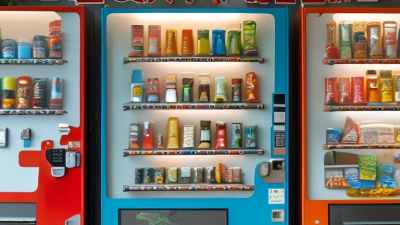
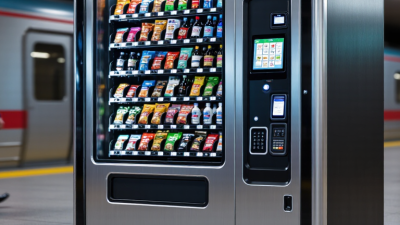
A combination vending machine sells different product types from one cabinet, such as chilled drinks, snacks, and shelf-stable essentials. Its value lies in useful variety, not simply more selections. A bottle needs a deeper, refrigerated lane; a fragile pastry needs gentle delivery. Operators should confirm temperature zones, tray spacing, payment options, and restocking access before purchase. Small details count.

24/7 operation means the machine can accept orders outside staffed hours, not that it runs without care. Sensors, remote inventory alerts, and fault notifications help staff spot empty spirals or temperature drift. Yet connectivity cannot refill a slot. This matters at night.

Grand View Research valued the global vending machine market at USD 18.28 billion in 2022 and forecast a 10.7% annual growth rate through 2030. That estimate signals expanding demand, but it does not prove every product mix will sell. A site near a factory shift change may need coffee, water, and filling snacks; a hotel lobby may favor chargers and toiletries. Suppliers in China should be assessed on configurable layouts, cooling stability, spare-part availability, and documented uptime tests. Mixed cabinets can also complicate stock rotation. It is easy to underestimate. Test a real assortment under local heat and peak-hour conditions before scaling.

Combination Vending Machines: Product Mix and 24/7 Operation

A combination vending machine offers snacks and beverages from one unit. This chart shows the 24 hours of scheduled availability per day implied by 24/7 operation; it does not represent guaranteed uptime.

Classify Chinese Suppliers by OEM/ODM, Smart-Retail, and Export Focus

China’s combination vending suppliers are best classified by their operating strengths. OEM-focused factories suit buyers with fixed product specifications and larger orders. Check cabinet dimensions, refrigeration performance, and sample consistency before discussing price. ODM suppliers can adapt layouts, payment modules, and screen interfaces. Ask for drawings and a working prototype; a polished render proves little.

Smart-retail suppliers emphasize remote inventory, sales dashboards, and fault alerts. These features matter when machines sit across several sites. Cantaloupe’s 2024 Micropayment Trends Report found that cashless payments made up 76% of vending transactions in 2023. That figure supports testing local payment compatibility, not assuming one module fits every market. Export-focused suppliers may offer multilingual manuals, custom packaging, and shipment documentation. Confirm spare-part lead times and warranty coverage in writing. Small details matter.

Tips: Request a video of the machine dispensing chilled and ambient products under load. Check connectivity recovery after a brief network outage. Compare suppliers using the same test list. Their categories can overlap, and I would not treat any single factory claim as proof of long-term reliability.

Compare Capacity, Refrigeration, Payment, and Remote-Monitoring Specifications

Top Combination Vending Machine Suppliers in China?

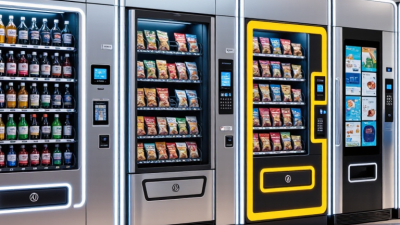
Compare usable capacity, not just the advertised number of selections. A machine with 40 product lanes may hold fewer items than expected if packages are wide or irregular. Ask for a sample layout using your actual bottles, cans, and snack packs. That matters. Check whether each compartment can be adjusted without specialist tools, and confirm the stated capacity reflects real products rather than idealized dimensions.

Refrigeration specifications should name the operating temperature range and explain how the cabinet handles frequent door openings. For chilled drinks, request temperature readings under realistic conditions, not only an empty-machine test. Payment options also need practical detail: confirm support for contactless cards, mobile wallets, and cash if your location requires them. Ask about transaction fees and what happens when the network drops. Remote monitoring should show stock levels, temperature alerts, and fault logs, with clear update intervals. A dashboard that reports problems hours late is less useful than it looks. One detail is easy to miss: check who can access sales and device data. Supplier tables can be tidy but incomplete, so compare written specifications with a live demonstration. Even then, installation conditions may change performance.

Check Appliance Safety Against IEC 60335-2-75 Requirements

Top Combination Vending Machine Suppliers in China?
Check Appliance Safety Against IEC 60335-2-75 Requirements

When comparing combination vending machine suppliers in China, ask how each exact model is assessed against IEC 60335-2-75. This standard covers safety requirements for commercial dispensing appliances and vending machines, alongside IEC 60335-1. Confirm the applicable edition and market requirements with a qualified testing laboratory. A supplier’s general safety statement is not the same as a model-specific test report.

Review evidence for the machine’s actual configuration, including refrigeration, payment hardware, and dispensing modules. Ask about electric shock protection, abnormal-operation tests, temperature rise, and stability. During a factory review, inspect cable entries, door hinges, sharp edges, and access panels. Small details matter. Verify that the report identifies the model and matches the supplied parts; a report for a similar unit may not cover later changes. Paperwork helps, but it cannot replace independent assessment. Even a careful checklist can miss a detail.

Tips: Request the full test report, not just a certificate image. Check the model number, test date, laboratory, and scope. Ask who approves component substitutions, and get changes documented. If a supplier cannot explain a finding clearly, pause and seek technical clarification before ordering.

Top Combination Vending Machine Suppliers in China? — Check Appliance Safety Against IEC 60335-2-75 Requirements
Assessment Dimension What to Verify Evidence to Request Evaluation Guidance
Applicable safety standard Confirm that the proposed combination vending machine is assessed against IEC 60335-2-75, together with the applicable general requirements of IEC 60335-1. Test report or certification documents identifying the appliance model, standard editions, amendments, and tested configuration. Check that the documented editions are accepted for the intended destination market and certification route.
Product configuration and scope Check that the assessment covers the actual machine type, including its dispensing functions, refrigeration or heating features, payment equipment, and installed options where applicable. Model specification, electrical diagrams, bill of materials, and a list of options covered by the safety assessment. Do not assume a report for a related model covers a different configuration; ask the test body or certification body to confirm applicability.
Electrical protection Review protection against electric shock, including accessible parts, insulation, protective earthing where required, and power-supply connections. Relevant test-report sections, wiring diagrams, earthing details, and inspection records. Verify that the evidence corresponds to the production design and the machine’s rated electrical supply.
Temperature and heating hazards Check temperature-related tests for relevant components and accessible surfaces under the operating conditions specified by the applicable standard. Temperature test results, component ratings, and details of operating modes included in testing. Confirm that heating, cooling, and combined operating modes are represented where fitted.
Moisture and liquid exposure Review protection against moisture-related hazards for the machine’s intended location and use, including foreseeable liquid exposure relevant to its design. Applicable moisture-test results, enclosure or drainage information, and installation instructions. Check that test conditions match the product’s intended environment; do not infer an IP rating unless it is separately documented.
Mechanical hazards and stability Review safeguards against accessible moving parts and other mechanical hazards, as well as stability provisions relevant to installation and use. Risk-related test results, machine layout, anchoring or installation instructions, and service-access information. Confirm that guards and safety-related parts remain effective during normal use and the documented servicing procedures.
Abnormal operation and component protection Check that relevant abnormal-operation tests and protective measures are documented for the appliance and its electrical components. Test-report results, protective-device specifications, and component safety documentation. Verify that critical components and protection devices match those used in the tested configuration.
Production consistency Determine how the manufacturer controls changes to safety-critical materials, components, wiring, and assembly processes. Quality-control procedures, change-control records, incoming inspection criteria, and production inspection records. Ask how design or component changes are reviewed to establish whether additional safety evaluation is needed.
Instructions and markings Review required ratings, warnings, installation details, and user or service instructions for the intended market. Product nameplate artwork, manuals, warning labels, and language versions. Check consistency between the marked ratings, technical file, test documentation, and delivered machine.
Traceability and after-sales support Check whether the supplier can trace production units and provide replacement parts and technical documentation for safety-related components. Serial-number or batch-traceability procedure, spare-parts list, and support process. Record the commitments in the purchase specification and quality agreement.
Assessment note This table is a supplier-evaluation checklist, not a test report, certification, or declaration that any machine complies. Confirm the applicable standard edition, national deviations, and conformity-assessment requirements with the relevant testing or certification body for the destination market.

Assess Chilled-Food Control Against the FDA Food Code’s 5°C Limit

When comparing combination vending machine suppliers in China, examine chilled-food controls, not only capacity or screen design. The FDA Food Code uses 5°C (41°F) as the cold-holding limit for time/temperature control for safety foods. It is a useful benchmark, but the Code is a model; local rules and product requirements may differ. Ask for measured cabinet performance under realistic loading conditions.

A supplier should explain sensor placement, alarm thresholds, temperature recovery after door openings, and record access. One sensor near the cooling outlet can miss warm pockets beside a crowded tray. Request test data from a fully stocked machine, including warm ambient conditions and repeated dispensing. Check whether staff can review logs and calibrate probes. Paper specifications look tidy. Real machines are messier.

Tips: Confirm that displayed temperatures reflect food-zone measurements, not just evaporator air. During commissioning, test several shelves with a calibrated probe, then repeat checks during routine service. Set alerts before food reaches 5°C, allowing time to respond. Document corrective actions under applicable procedures. No single test proves ongoing control; loading habits, blocked vents, and missed maintenance can undo good design.