Top 10 Coffee Vending Machines for Businesses?

Choosing a coffee vending machine for a business is about more than finding the lowest price. The right model should match daily demand, available floor space, drink preferences, and the time staff can realistically give to upkeep. A small office may need a compact unit with dependable espresso and simple controls. A busy warehouse or hotel lobby may need faster service, larger ingredient capacity, and payment options for visitors.

This guide compares ten machines through practical features: beverage selection, serving capacity, footprint, cleaning requirements, payment systems, and support availability. A clear ingredient display and an easy-to-reach waste tray can matter during a crowded morning. So can refill access. Small details, but they affect daily use. Specifications and operating costs can vary by supplier, configuration, and location, so buyers should confirm current details before ordering. A long feature list can look impressive, yet it does not guarantee a good fit. That is worth remembering.

The selections are intended to help business owners, office managers, and facility teams narrow their options—not replace a site assessment or supplier discussion. Consider who will use the machine, how often it will be serviced, and whether the expected drink range justifies its cost. The best choice may be less elaborate than expected. And sometimes, the simplest machine is not the easiest one to maintain.
Top 10 Coffee Vending Machines for Businesses?

Define Business Coffee Vending Machines by Type, Use, and Workplace Setting

Business coffee vending machines are automated systems that prepare or dispense coffee with limited staff involvement. Their type matters: bean-to-cup units grind whole beans for each drink, while soluble-coffee machines mix measured ingredients with hot water. Traditional filter machines brew larger batches for shared breaks. Each option trades speed, upkeep, and drink variety differently.

Consider the workday, not just the menu. A compact office with steady foot traffic may suit a bean-to-cup machine with a modest water tank and easy-to-empty grounds tray. A warehouse break room may need a faster unit, larger ingredient capacity, and sturdy controls that work with gloves. For meeting rooms, quiet operation and quick cleaning can matter more than dozens of recipes. Small detail, big difference.

Workplace setting also shapes service needs. A self-service machine in a public-facing lobby should have clear instructions, accessible controls, and predictable restocking. In a small team kitchen, staff may tolerate a slower brew if the coffee tastes fresher. Check daily cup volume, counter space, power access, drainage, and who will clean the machine. These figures are easy to underestimate. I would also question whether every advertised drink will actually be used; unused options can complicate training and maintenance. A realistic choice starts with observed routines, then matches capacity and care requirements to them.

Use NCA’s 2024 Finding: 67% of U.S. Adults Drank Coffee the Previous Day

Top 10 Coffee Vending Machines for Businesses?

The National Coffee Association’s 2024 National Coffee Data Trends report found that 67% of U.S. adults drank coffee the previous day. That figure makes workplace coffee more than a small perk: many employees may expect it during an ordinary shift. For businesses comparing ten vending machines, the useful question is not just how many drinks each model offers. Consider daily capacity, refill access, cup sizes, and how easily staff can clean the machine. Small details show up every morning.

NAMA’s State of the Industry reporting provides a broader view of convenience services, including vending and office coffee service. Together, these sources suggest a practical buying lens: estimate demand before choosing features. A busy lobby may need fast dispensing and larger ingredient storage. A small office might value a compact footprint and simple maintenance more. The 67% figure is national, not a forecast for one workplace. That distinction matters. A machine can still disappoint if its menu is impressive but its queue moves slowly.

Tips: Track drink use for two weeks before purchasing. Note peak times, popular cup sizes, and refill frequency. Ask vendors about cleaning time, service response, and ingredient costs. Test the interface with people who will actually use it. A little inconvenience can become a daily one.

Top 10 Coffee Vending Machines for Businesses? — Use NCA’s 2024 Finding: 67% of U.S. Adults Drank Coffee the Previous Day

A practical comparison of common business coffee-vending formats. The options below describe machine types, not ranked products; features and capacity vary by model.

# Machine format How it serves coffee Best-fit business setting Key advantages Planning considerations
1 Bean-to-cup Grinds whole beans and prepares each drink on demand. Offices, hotel breakfast areas, and staffed break rooms. Fresh grinding; can offer several drink options in one unit. Requires regular cleaning, ingredient replenishment, and waste handling.
2 Fresh-brew filter coffee Brews ground coffee in batches or brews servings to order, depending on the machine. Workplaces and food-service areas where regular coffee is the main demand. Simple menu and familiar coffee style. Batch-brewed coffee needs appropriate holding and freshness procedures.
3 Espresso-based vending Uses pressurized brewing to prepare espresso-style drinks; some units add milk or milk alternatives. Customer-facing venues and offices seeking café-style choices. Can serve espresso-based options from a self-service point. Milk systems, where fitted, need frequent cleaning and temperature-control procedures.
4 Instant coffee dispenser Mixes soluble coffee with hot water at the point of service. High-traffic locations prioritizing speed and straightforward operation. Quick preparation and no coffee grounds from brewing. Drink quality depends on the soluble ingredients and the machine’s mixing and water systems.
5 Single-serve pod machine Brews one portion from a sealed coffee capsule or pod. Small offices, meeting areas, and locations with varied individual preferences. Portion-controlled preparation and a choice of individual servings. Account for pod storage, packaging waste, and compatibility with the machine.
6 Ground-coffee portion-pack machine Brews a pre-portioned serving of ground coffee, commonly using a paper filter pack. Small workplaces and self-service areas seeking brewed coffee with controlled portions. Consistent portions and simple ingredient storage. Check supply availability and how used filters and grounds are disposed of.
7 Hot-and-cold coffee vending unit Offers hot coffee and, on suitably equipped machines, chilled coffee drinks. Retail, leisure, and mixed-use sites serving customers throughout the day. Supports different drink preferences from one point of service. Cold-drink ingredients and refrigeration add stocking and maintenance requirements.
8 Tabletop coffee vending machine Provides automated drink preparation in a compact counter-mounted format. Smaller offices, reception areas, and spaces with limited floor area. Uses counter space rather than a dedicated floor-standing footprint. Confirm counter strength, nearby utilities, and clearance for servicing.
9 Floor-standing coffee vending machine Combines a self-service interface and drink preparation in a freestanding cabinet. Large workplaces, campuses, and public-facing venues. Designed as a dedicated self-service station with room for integrated supplies. Measure the installation area and verify access, power, water, and service clearances.
10 Plumbed-in or water-tank machine Uses either a connected water supply or a refillable internal tank, depending on the configuration. Plumbed-in: fixed high-use sites. Tank-fed: locations without a nearby water connection. Offers a choice between continuous water connection and more flexible placement. Plumbed units need suitable installation; tank-fed units require routine refilling and cleaning.

Selection note: Before purchase or lease, compare expected daily demand, drink menu, payment needs, water and power access, cleaning workload, ingredient storage, and service support. The 67% figure in the headline refers to the NCA’s reported share of U.S. adults who drank coffee the previous day in 2024; it is a population-level finding, not a forecast of demand at any individual business.

Compare 10 Business Coffee Machines by Capacity, Brew Style, and Payment Options

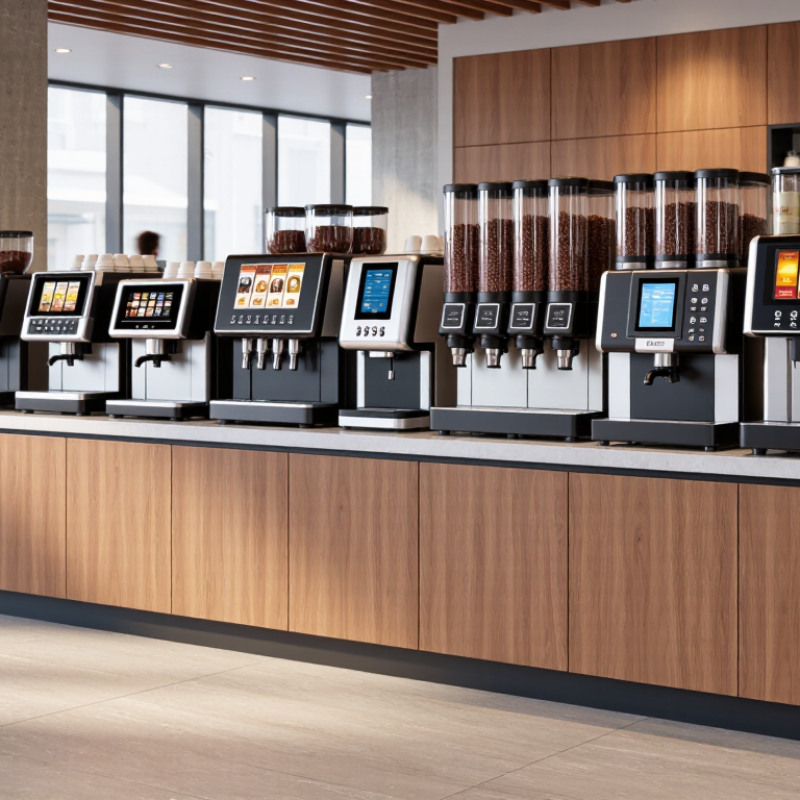
A pod countertop machine suits a small team, brewing one cup at a time with optional card payment. A batch-drip unit serves a carafe quickly and works well where staff refill a shared pot. A bean-to-cup machine grinds beans for espresso-style drinks, though its hopper needs regular attention. An instant-coffee dispenser handles busy corridors with minimal brewing time, but the cup may taste less fresh. Fast, but limited.

A high-capacity bean-to-cup model can serve a steady queue and offer several drink choices. An espresso vending machine prepares stronger, smaller drinks, so check cup size and service speed. A machine with chilled coffee options adds variety, but needs space for cold storage. Payment setups vary: some support coins and notes, while others use cards or contactless readers. Confirm compatibility before buying.

A plumbed brewer reduces refill trips; a tank-fed model is easier to place away from plumbing. A dual-outlet machine can reduce waiting during shift changes, provided its brewing capacity matches actual demand. That makes ten useful formats to compare. Ask suppliers for tested cups per hour, cleaning steps, and payment fees. Capacity charts can flatter a machine; real queues are less tidy. Test it onsite.

Top 10 Business Coffee Machine Configurations

Compare indicative serving capacity, brew style, and payment options across common commercial machine configurations.

Configuration Indicative capacity Brew style Common payment options
Compact filter brewer30 cups/hourBatch filterNone or countertop card reader
Large-capacity filter brewer45 cups/hourBatch filterNone or countertop card reader
Single-cup pod machine50 cups/hourCapsule or podContactless card, mobile wallet
Instant-drink dispenser80 cups/hourInstant soluble ingredientsCoins, bills, card, mobile wallet
Compact bean-to-cup machine60 cups/hourFresh-ground espresso-basedContactless card, mobile wallet
Office bean-to-cup machine100 cups/hourFresh-ground espresso-basedContactless card, mobile wallet, app
High-volume bean-to-cup machine150 cups/hourFresh-ground espresso-basedCoins, bills, card, mobile wallet
Countertop coffee vending machine120 cups/hourBean-to-cup or instant mixCoins, bills, contactless card
Floor-standing coffee vending machine180 cups/hourBean-to-cup or instant mixCoins, bills, card, mobile wallet
High-throughput vending machine240 cups/hourAutomated bean-to-cup or instant mixCoins, bills, contactless card, mobile wallet

Capacity figures are indicative estimates for representative commercial configurations, not guarantees for specific models. Actual output depends on drink selection, cup size, water supply, and service intervals. Payment hardware and accepted methods vary by setup.

Assess Purchase Costs, Energy Use, Maintenance, and Service Needs

Top 10 Coffee Vending Machines for Businesses?

Compare the purchase price with the full installed cost. Ask whether plumbing, payment equipment, delivery, filters, and staff training are included. A low quote can hide expensive add-ons. Check warranty length and parts coverage, too. A machine serving a busy lobby needs a different service plan from one in a small office.

Energy use deserves a real estimate. The U.S. Energy Information Administration reported an average commercial electricity price of about 12.7 cents per kilowatt-hour in 2023. At that rate, a 1.5-kilowatt machine running three equivalent heating hours daily costs roughly $209 yearly, before standby use. ENERGY STAR says certified commercial coffee brewers use about 30% less energy than conventional models; treat that as a benchmark, not a vending-machine guarantee. Measure actual consumption where possible. Standby draw adds up.

Maintenance is not just an annual service visit. Ask who cleans milk lines, replaces water filters, and responds when a grinder jams before the morning rush. Get response times, labor charges, and common replacement-part prices in writing. A service contract may look costly until a machine sits empty for two days. One weak spot in many comparisons: buyers estimate drink sales carefully, but overlook staff time spent refilling cups and wiping spills. That cost is real.

Match Machine Capacity to Workforce Size, Site Traffic, and Drink Demand

Top 10 Coffee Vending Machines for Businesses?

Match Machine Capacity to Workforce Size, Site Traffic, and Drink Demand

Choosing a coffee vending machine starts with drink demand, not headcount alone. A 60-person office may need modest capacity if staff bring coffee from home. A smaller site can need more drinks when customers, contractors, or shift workers pass through all day. Track daily sales and busy periods for at least two ordinary weeks before comparing machines. Include hot chocolate or other drink choices in your estimates.

Peak traffic matters. If 25 employees arrive within half an hour, a machine with a slow brew cycle can create a queue, even when its daily capacity looks adequate. Check servings per hour, cup storage, ingredient capacity, and refill frequency. A machine near a reception desk may also need faster service than one in a quiet staff room. Small details count.

Leave room for uneven days, but avoid buying far beyond likely demand. Extra capacity can mean higher costs and ingredients sitting unused. Keep a buffer. Review sales after installation, especially after staffing changes or seasonal shifts. One useful check is whether the machine runs out before the next scheduled refill. That measure is not perfect; people may simply stop buying when choices run low. Still, pairing sales records with brief staff feedback gives a more grounded fit than guessing from workforce size alone.